
Inviting ancestors to dinner sounds like something that would take a lot of planning. It feels like it should be elaborate or formal. In reality, it is one of the simplest and most meaningful ways to practice hands-on family history in our home. It feels like gathering. It feels like remembering. It feels like connection.
Instead of keeping our ancestors on a page or in a chart, we bring them into our everyday life. We make space for their stories at our table. This family history dinner has quickly become one of our favorite family history traditions because it blends food, stories, research, and togetherness in a way that children naturally understand.
We have enjoyed planning it out, especially the food. We all work together. It’s an all-hands-on-deck experience for us.
What “Inviting Ancestors to Dinner” Really Means
We don’t actually expect the ancestor to show up for dinner. Instead, it is an honorary dinner on their behalf. Inviting them means we invite their memories and stories of their life to the dinner table.
How We Use FamilySearch to Build the Experience
For us, inviting ancestors to dinner starts with a little research at FamilySearch.org. We usually look at which relatives have birthdays coming up so we can honor and celebrate them on their birthdays.
FamilySearch activities are what bring the stories to life. We look up where our ancestor was born and read through some of the stories that have been added. Those details guide our meal.
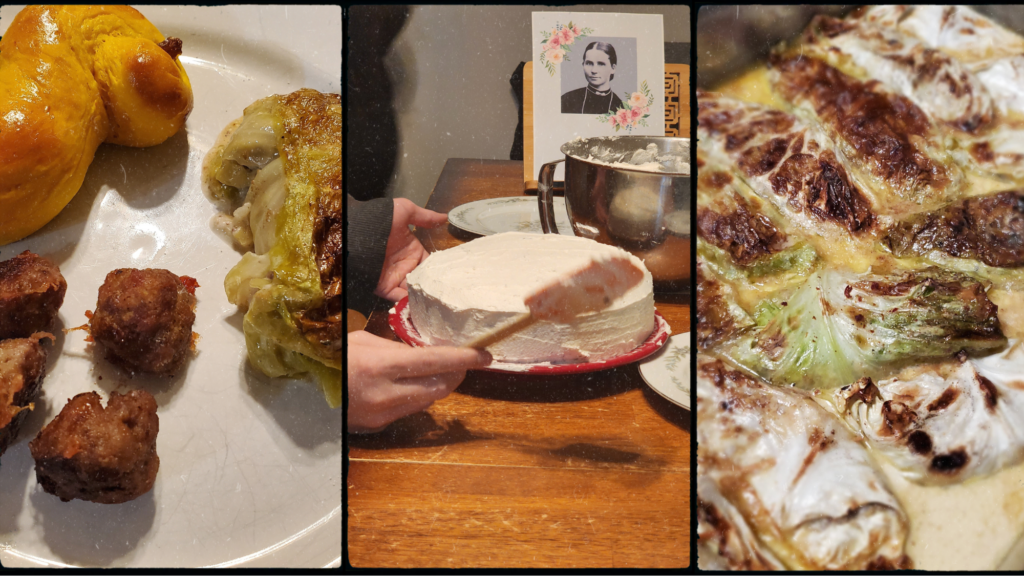
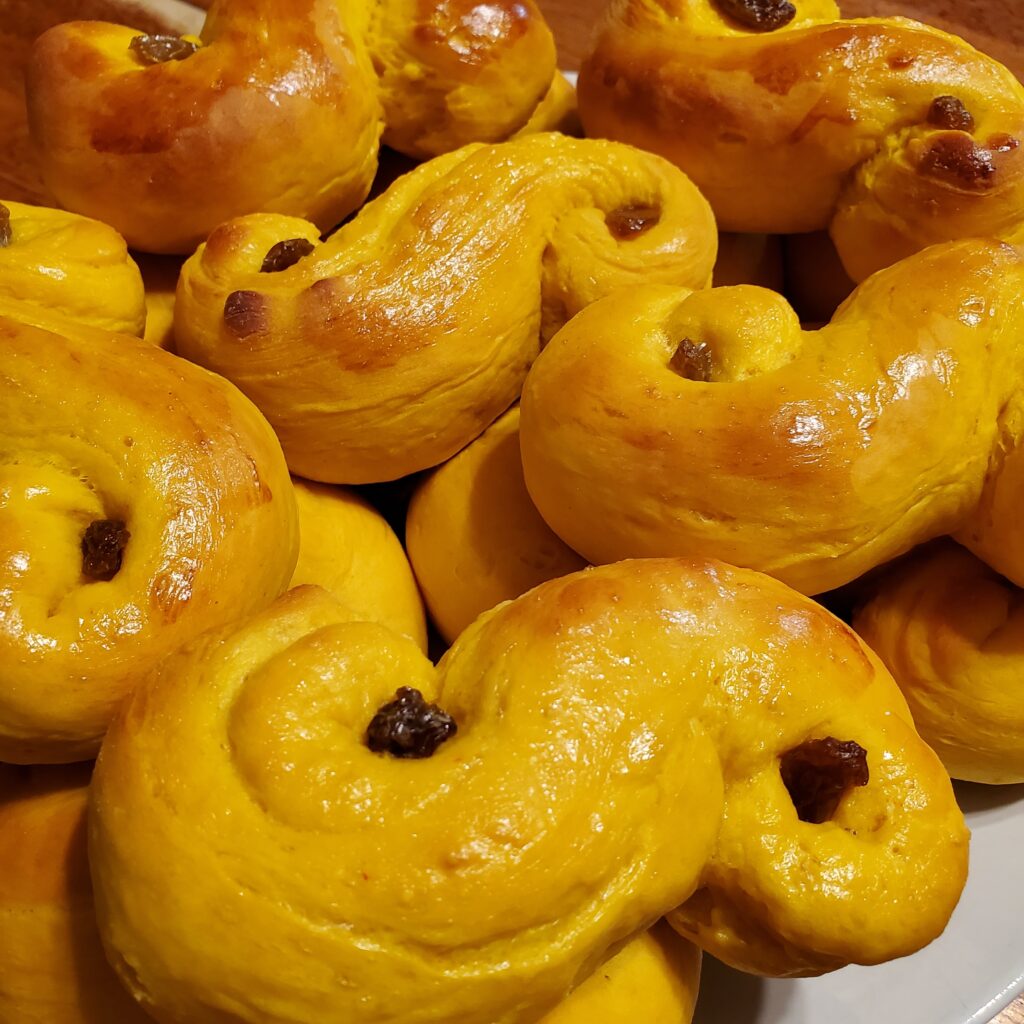
For one ancestor who was born in Sweden, we used FamilySearch to find recipes from that region. We made stuffed cabbage, St. Lucia rolls, and Swedish meatballs. Another ancestor was born in the United States, and a story on FamilySearch mentioned she cooked chicken fried in lard. So we did that too, with mashed potatoes and gravy.
Not all the kids loved the taste of the lard. That was okay. Even that became part of the memory.
Often, one child is invited to teach us what they found. This becomes teaching children about ancestors in the most natural way. They are not reciting facts. They are sharing stories.
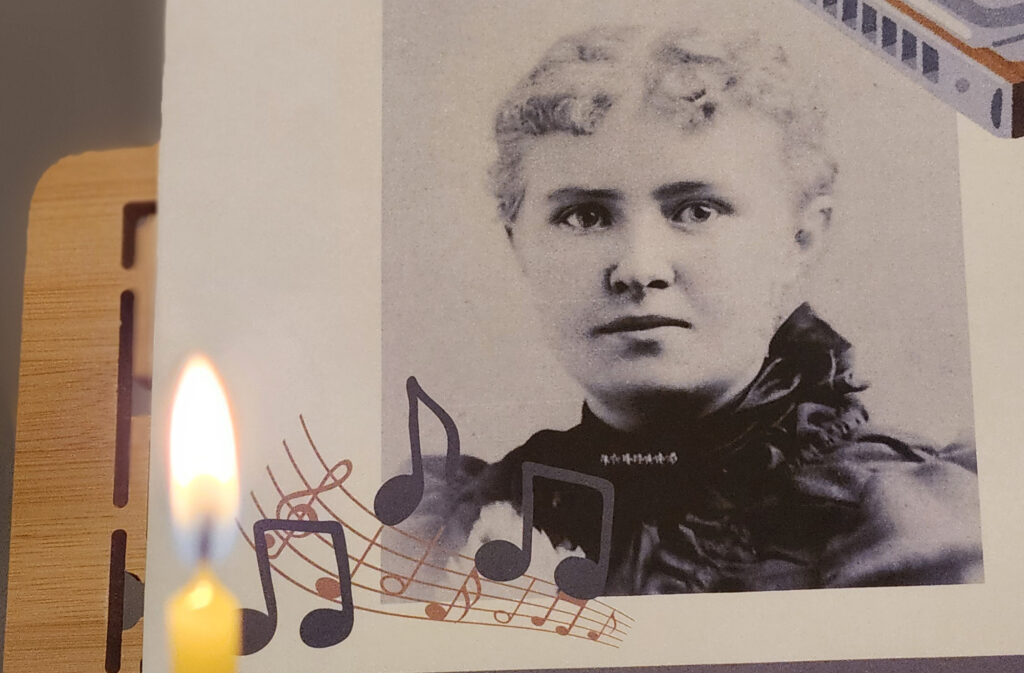
We usually make a simple poster in Canva. We use a regular 8 x 11.5” piece of paper. On it, we place a picture of the ancestor and at least one image that represents something about them. Sometimes it is a place. Sometimes it is a hobby. One time it was a harmonica because she used to play while her husband danced.
We set the poster where they would “sit” at the table. We use our nice dishes, the ones that make a meal feel special. We bake a birthday cake. We light a birthday candle. We sing “Happy Birthday” to our ancestors as if they were truly part of the celebration.
This is interactive family history. It is simple. It is visual. It feels real to children.
The Food, the Mess, and the Memories
One time, when we were making a birthday cake, the mixer was turned on too high. Cocoa powder and flour flew into the air and across the counter. We laughed. We cleaned it up. We pressed on.
Those moments matter just as much as the stories. Family storytelling traditions are built through shared effort, shared mistakes, and shared laughter. Perfection is not the goal. Presence is.
Why This Simple Tradition Matters
Inviting ancestors to dinner turns research into relationship. It creates family history traditions that children remember. It helps them see their ancestors as real people with habits, foods, joys, and quirks.
This is why hands-on family history works so well. It moves family history off the page and into lived experience. It is a meaningful family history activity for kids because it invites their senses, their curiosity, and their emotions into the story.
When we invite our ancestors to dinner, we are not just honoring the past. We are creating connection, memory, and belonging that our children will carry forward.
And one day, my posterity will invite me to dinner. Right?
Leave a Reply