
I remember the moment I realized family history was more than just the work done on FamilySearch.org and within the walls of the temple. Family history was happening in my home anytime we were learning about our ancestors, looking at the thousands of pictures saved on our phones, or bringing a food item our ancestors would have eaten to share at a youth family history night.
I want my children to know that family history can be fun, meaningful, and engaging. And it isn’t limited to what I once thought family history was.
Thus came a new tradition. It might sound weird at first, but we invited an ancestor to dinner. We found an ancestor with an upcoming birthday, and they became our guest of honor. We had fun learning about them and eating food they could have eaten when they were living. Our family enjoyed the process of learning about an ancestor, feeling a closeness to them, tasting new menu options, and making foods and decorations together. We created a living history while learning about family history.
Looking back, I realized that none of my children were worried about whether we had documented every source correctly or filled in every blank space on our family tree. They were excited because they were participating. They were asking questions, trying new foods, making decorations, and imagining what life might have been like for someone in our family. Family history had stepped off the page and into our home.
That experience helped me see family history differently. It wasn’t just something we researched. It was something we could experience together. And that is what family engagement is all about.
What Family Engagement Really Is
Family engagement is the practice of inviting people into family history through stories, conversations, experiences, traditions, games, and hands-on participation. It transforms family history from something we learn about into something we actively experience.
Family engagement can happen:
- Around a dinner table
- During a car ride
- While baking a family recipe
- During a cemetery visit
- Through a game night
- While looking through old photographs
- While interviewing a grandparent
The goal isn’t simply to create family historians. It’s to help people, especially family members, participate in the stories, traditions, and experiences that make up their family heritage.
When people participate, they care. When they care, connection grows.
One of the things I love most about family history is that it doesn’t fit into a single box. Every family is different, and family engagement can be adapted to the interests, ages, and personalities of the people involved.
Though it wasn’t always that way for me. Engaging our family in family history isn’t something we have always done or tried. We are learning, just like you.
Roots and Handmade Tales is a resource we hope families will use to help their children, grandchildren, extended families, friends, and neighbors engage in family history work and learn more about their heritage in fun and memorable ways.
Family engagement is simply the practice of extending that invitation.
Why It Matters More Than You Might Think
Engaging your family in family history is about more than simply doing fun activities to get your kids involved. It isn’t a box to check off a list or a project to complete once and then forget about.
Your family needs belonging.
Your children (teens included) need belonging.
In a world that constantly pulls families in different directions, children need opportunities to understand where they come from and how they fit into a larger story. Family engagement helps provide that. It helps children see that they are part of something bigger than themselves, something that began long before they were born and will continue long after they are gone.
Research has consistently shown that children who know family stories often demonstrate greater resilience, stronger identity, and increased confidence during difficult times.
But you don’t need a research study to notice this. Many parents, including us, have seen it happen firsthand.
There is something powerful about a child discovering:
- An ancestor who overcame hardship
- A relative who shared their interests
- A family tradition that has lasted for generations
- A story that helps them understand where they come from
These moments help children see themselves as part of something larger than their immediate circumstances.
Family engagement helps transform family history from information into identity. It gives children roots. It gives families shared experiences. It also creates opportunities for conversations that might not happen otherwise.
I have watched as my children discover stories about relatives and instantly relate to them. It has happened for me as well.
Those moments matter.
Children may not remember every name, date, or place attached to their family tree. But they often remember the stories. They remember the ancestor who loved to build things, the grandmother who showed courage during difficult times, or the relative who shared their interests and talents.
Those connections help transform family history from something they learn about into something they carry with them.
And that is why family engagement matters so much.
Why It Still Feels Hard
If family engagement is so valuable, why do so many families struggle with it?
Sometimes parents feel like they don’t know enough family history. Sometimes children seem uninterested. Sometimes life feels too busy. Sometimes family history feels intimidating, overwhelming, or even boring.
I have related to every one of those reasons at different points in my life.
Many people assume they need:
- A complete family tree
- Years of genealogy experience
- Extensive research
- Elaborate activities
before they can involve their family.
The truth is much simpler.
Most meaningful family engagement begins with one story, one conversation, or one shared experience.
You don’t have to be an expert. We certainly aren’t experts, but that is part of the fun. There is something special that happens when families learn together. Questions lead to conversations. Conversations lead to discoveries. Discoveries often lead to even more questions.
Family history doesn’t require having all the answers before you begin.
It simply requires being willing to start.
Start With Stories, Not Systems
Stories are often the easiest place to start with family engagement.
That means you can set aside charts, records, research plans, and complicated projects for a while. If you haven’t started with any of those things yet, you are still in a wonderful place to begin.
Start with a story.
Stories can be about an ancestor, a grandparent, a parent, a sibling, or even yourself. They can be stories from generations ago or stories that happened last week. They are all part of your family history.
Most people connect to stories long before they connect to genealogy.
A story can be shared:
- During dinner
- Before bedtime
- On a road trip
- While folding laundry
- During a family gathering
Dates and facts can be difficult for children, especially young children, to remember. They can feel abstract and disconnected from everyday life. Stories are different. Stories help children imagine, relate, and connect.
This is one reason family storytelling can be so powerful.
One way our family likes to get started with storytelling is by asking questions. We created Family Storytelling Cards to help families ask simple but meaningful questions. Each card includes a simple question and a “dig deeper” question that encourages additional conversation.
The wonderful thing about questions is that they work for everyone.
Not everyone has parents, grandparents, or relatives available to answer questions about the past. Some people have family members who have passed away. Others have family members who never shared their stories. Some simply do not know what questions to ask.
Yet every person has a story worth preserving.
Taking the time to ask someone about their life helps them recognize that their experiences matter. It gives them an opportunity to reflect, remember, and preserve pieces of their personal history that might otherwise be lost.
Sometimes all we need is a question or prompt that gets the conversation started.
One story often leads to another.
I Follow Their Interests
One of the most natural ways to engage children in family history is to pay attention to what they are already drawn to.
Every child has something they love. A hobby, a skill, a curiosity, a passion. And more often than not, there is an ancestor somewhere in their family tree who shared it.
That connection point changes everything.
When a child discovers that an ancestor loved the same things they love, family history stops feeling like something they are being taught and starts feeling like something that belongs to them.
I have seen this in my own children. We have a child who loves woodworking and carving. Learning that relatives on both sides of our family worked with wood — one whose handmade furniture is now displayed in a museum, another who made his living as a carpenter in Denmark — gave that interest a whole new dimension. It wasn’t just a hobby anymore. It felt like something inherited.
Another child loves reading stories and journals. Finding that ancestors left behind written records on FamilySearch turned family history into something personal and exciting for them. They come to me to share what they’ve found, pointing out personality traits and interests that seem to have traveled through generations.
You don’t have to manufacture interest. You just have to notice what is already there and find the ancestor who speaks to it.
A child who loves:
- Cooking → explore family recipes, find an ancestor who fed a large family, or learn what people ate during a particular time period
- Animals → research ancestors who farmed, ranched, worked with animals, or research to find what animals were common in the areas your ancestors are from when they were alive
- Art or drawing → look for ancestors who were craftsmen, seamstresses, painters, decorators, or known for their handmade work
- Building or fixing things → find the carpenters, blacksmiths, and tinkerers in your family line
- Adventure or travel → discover ancestors who emigrated, crossed oceans, or moved across the country
- Stories and reading → search for journals, letters, and memories on FamilySearch, ask living relatives to tell you stories about your ancestors
- Games and play → research the games and pastimes popular during an ancestor’s lifetime and try them together
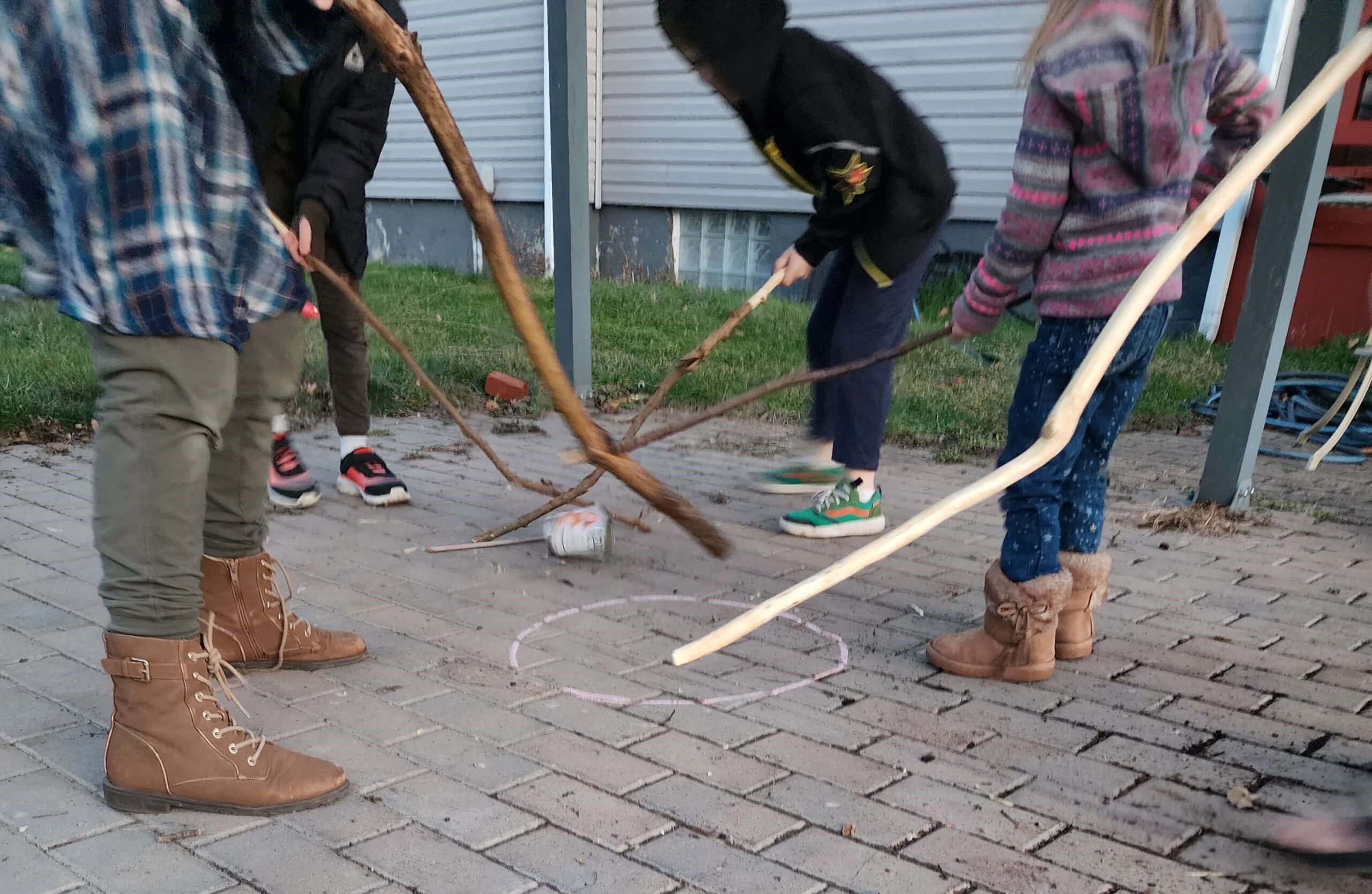
It feels like everyone in my family has different interests, though some kids have some interests in common. But one thing is for certain – we all enjoy games. My family has loved games like Handpicked Histories and Family History Bingo as well as playing games our ancestors did, like Kick the Can and Jacks.
You don’t need to know everything about your family tree to use this approach. You just need to be paying attention to your children — and be willing to go looking when the right moment appears.
Simple Ways to Make Family History Engaging at Every Age
Young Children
Young children learn best through touch, movement, stories, and visual experiences.
Ideas:
- Looking through family photographs
- Holding safe heirlooms
- Listening to simple ancestor stories
- Playing simple games
- Visiting cemeteries
- Drawing pictures inspired by family stories
- Exploring with hands-on family history activities
- Matching photographs to family members
You can learn more about ways we’ve engaged our young children in family history here.
Elementary Age Children
Elementary-aged children are naturally curious.
Ideas:
- Interviewing grandparents
- Creating simple timelines
- Exploring family recipes
- Participating in the activities on FamilySearch.org
- Using storytelling prompts
- Learning where ancestors lived
- Playing family history games
You can learn more about ways we’ve engaged our elementary-aged children in family history here.
Teens
Teenagers often begin asking deeper questions about identity, purpose, and belonging.
Ideas:
- Journaling about ancestor stories
- Comparing their lives to those of ancestors
- Interviewing relatives
- Adding memories and stories to FamilySearch and in the Memories app
- Participating in Billion Graves
- Keeping a daily journal or blessings journal
- Researching a chosen ancestor
- Cooking a family recipe
- Reflecting on lessons learned
You can learn more about ways we’ve engaged our teens in family history here.
All Ages Together
Family engagement becomes especially powerful when generations participate together.
Ideas:
- Family storytelling night
- Invite an ancestor to dinner
- Family history game night
- Make and participate in seasonal traditions
- Service projects
- Movie night featuring a favorite film from an ancestor’s lifetime
For ideas on how to engage your whole family, click here.
Bring Family History Off the Page
One of the easiest ways to build family engagement is to weave it into the routines you already have.
It belongs in everyday life.
Many opportunities already exist within normal family routines:
- Meals
- Holidays
- Homeschool lessons
- Gardening
- Cooking
- Play time
- Road trips
- Family gatherings
Family engagement works best when it becomes part of life rather than another project on a growing to-do list.
I’ve learned this in my own life. In fact, it’s one of those things I am still learning and seeing the blessings of. When my family decided to make family history more of a family culture thing rather than something we dabbled in every now and again, we noticed a lot of positive changes in our family and in our home.
And the more you practice at making it a part of everyday life, the easier it becomes to get your family to engage and the easier it is to see the blessings of family history in your life.
What To Do When It Doesn’t Work
Not every activity will be a success. Trust me. We’ve had times when children lost interest. A meal was tried and didn’t turn out as well as we had hoped. An activity we were trying out was a flop.
Conversations can fall flat. Sometimes your carefully planned activity receives little enthusiasm.
That’s normal. Connection is rarely built in a single moment. Every attempt gives us another opportunity to succeed. The more opportunities we have, the more likely success becomes.
So what do you do when it seems like engagement family doesn’t work out? What about when an activity seems to have failed or had no impact?
You might not want to hear me say to keep trying and to keep praying, but honestly, that’s where I would start. Don’t give up. There are SO MANY ways to engage your family; maybe you just haven’t found the one that has sparked interest in your family.
I have found that I tend to do the family history things I enjoy, but often my kids aren’t as willing to engage in that. While I could spend hours reading through my grandmother’s journals, not all of my kids would enjoy that same activity. It’s important to engage family members at their level of understanding and interest.
Being able to adapt a family history moment to engage everyone in your family is not impossible. But it does take prayer, thought, patience, and love.
Family engagement is often less like flipping a switch and more like planting seeds.
So keep planting. Keep sharing. Keep inviting.
A Simple First Step Today
If all of this feels overwhelming, start small. Sometimes small ends up bigger than we think.
A simple start can be just choosing one story to share.
It could be a story about an ancestor, a grandparent, your parents, your childhood, or even something that happened this week. Share it with someone you love. Ask a question. Listen to their answer. Let the conversation go wherever it naturally leads.
Maybe you’ll tell a story over dinner. Maybe you’ll look through old photographs together. Maybe you’ll call a grandparent, visit a cemetery, bake a family recipe, or ask your child what they would like to know about the people who came before them.
Don’t worry about having the perfect activity or saying all the right things. Family engagement isn’t built in a single evening. It grows one conversation, one story, and one shared experience at a time.
The first step doesn’t have to be impressive; it simply has to be intentional.
I have seen how one story has sparked a question. That question sparks a memory, and then sometimes another.
Before long, you’ll realize you aren’t just talking about family history anymore. You are engaging in it while you’re creating it.
Where to Go Next
Family engagement helps bring family history to life, but it is only one part of the journey.
As you begin sharing stories, creating experiences, and inviting others to participate in family history, you may find yourself wanting to discover more about the people who came before you, deepen those relationships, and preserve the traditions they passed down.
If you’re ready to continue the journey, explore these areas of Roots & Handmade Tales:
Family History → Learn how to discover records, stories, photographs, and memories that help you uncover your family’s history and preserve it for future generations.
Ancestral Connection → Explore ways to move beyond names and dates as you build meaningful connections with the people who came before you and discover what their lives can teach your family today.
Family history becomes richer when it is shared, experienced, and lived together. Every story told, every question asked, and every tradition continued helps strengthen the connections between generations.
Keep inviting. Keep engaging. Keep creating memories that will become part of your own family’s story.